Comparing CNC Milling and Swiss Turning for Optimal Production
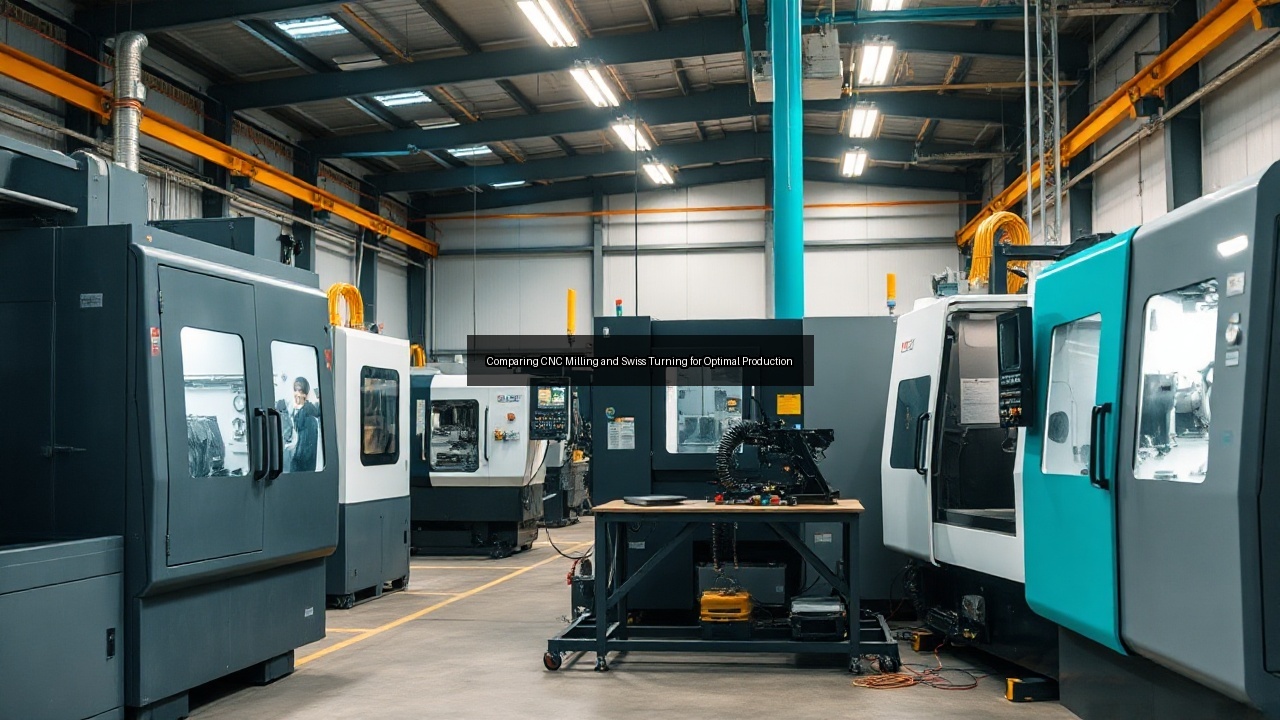
Understanding CNC Milling and Swiss Turning
What is CNC Milling?
CNC milling utilizes computer numerical control (CNC) technology to automate the process of removing material from a workpiece. This process employs rotating cutting tools to shape and refine various materials, including metals, plastics, and composites. The versatility of CNC milling makes it ideal for producing complex geometries and intricate designs. Operators can adjust cutting speeds, tool paths, and other parameters to achieve desired tolerances and surface finishes. The ability to program multiple axes allows CNC milling machines to create parts with high precision. Industries ranging from aerospace to automotive heavily rely on CNC milling for efficient production runs.
Introduction to Swiss Turning
Swiss turning, also known as Swiss machining, employs specialized lathes that allow for the high-speed, precision machining of small parts. Swiss lathes enable the workpiece to move while the cutting tool remains stationary, a process that significantly enhances accuracy and efficiency. This method is particularly suited for producing components with tight tolerances and fine details, making it an excellent choice for industries that require high precision, such as medical devices and microelectronics. Swiss turning services cater to various materials, including metals like steel and copper, as well as plastics such as acetal and PTFE, offering versatility in production.
Key Differences Between CNC Milling and Swiss Turning
While both CNC milling and Swiss turning are vital in modern manufacturing, key differences exist between the two processes. CNC milling excels in producing flat, complex shapes with diverse geometries, while Swiss turning specializes in creating cylindrical parts with high precision. The machining techniques vary significantly; CNC milling employs rotating tools to remove material from a fixed workpiece, whereas Swiss turning uses a combination of rotation and linear movement to achieve tighter tolerances. Furthermore, CNC milling is often employed for larger components, whereas Swiss turning is optimal for smaller, intricate parts. Understanding these distinctions helps manufacturers choose the right method for their specific production needs.
Applications and Advantages of Swiss Turning Services
Precision and Tolerances in Swiss Turning
Swiss turning services excel in achieving exceptionally high precision and tight tolerances, which are crucial for many applications. The design of Swiss lathes allows for precise control over the cutting process, resulting in parts that meet stringent specifications. Industries such swiss machining services as aerospace, medical device manufacturing, and electronics demand components with tolerances often within a few microns. The combination of advanced tooling and CNC technology in Swiss turning ensures consistent quality across production runs. This precision minimizes the need for extensive post-processing, saving time and reducing costs. When quality assurance is paramount, Swiss turning stands out as a reliable option for manufacturers.
Materials Used in Swiss Turning: An Overview
Swiss turning services accommodate a wide range of materials, enhancing their applicability across various industries. Common materials include metals such as stainless steel, aluminum, and copper, which offer durability and strength. Additionally, Swiss turning is effective for machining plastics like acetal and PTFE, which require careful handling to achieve desired finishes and tolerances. The ability to work with both metal and plastic allows Swiss turning to serve diverse applications, from manufacturing small components for medical devices to producing parts for automotive systems. This flexibility in material processing contributes to the growing popularity of Swiss turning among manufacturers.
Quality Assurance in Swiss Turning Services
Quality assurance is integral to Swiss turning services, ensuring that each component meets the required specifications. Companies often implement rigorous inspection protocols throughout the production process. Advanced measurement techniques, such as coordinate measuring machines (CMM), are employed to verify tolerances and surface finishes. ISO certification plays a crucial role in maintaining quality standards, providing customers with confidence in the reliability of the components produced. The focus on quality assurance in Swiss turning not only ensures compliance with industry standards but also enhances customer satisfaction by delivering high-quality, precision-engineered parts.
Comparative Analysis: CNC Milling vs. Swiss Turning
Machining Processes and Techniques
CNC milling and Swiss turning utilize distinct machining processes, each with unique techniques suited for specific applications. CNC milling involves a series of cutting operations where rotating tools remove material from the workpiece. This method allows for the creation of intricate designs and complex geometries. Conversely, Swiss turning relies on a sliding mechanism where the workpiece advances through the cutting tool, facilitating the production of cylindrical parts with high precision. The choice of machining process largely depends on the design requirements, with CNC milling favoring larger components and Swiss turning excelling in precision for smaller, detailed parts.
Surface Finishing Options
Surface finishing plays a vital role in both CNC milling and Swiss turning, influencing the aesthetic and functional qualities of the final product. CNC milling offers a range of finishing techniques, including bead blasting, anodizing, and polishing, allowing manufacturers to achieve desired surface characteristics. In contrast, Swiss turning may utilize similar finishing techniques but often focuses on achieving high-quality finishes directly from the machining process. The ability to produce smooth surfaces with tight tolerances in Swiss turning minimizes the need for additional finishing steps, making it a time-efficient choice for manufacturers looking to streamline production.
Cost-Effectiveness and Production Efficiency
Cost-effectiveness and production efficiency are critical considerations when comparing CNC milling and Swiss turning. CNC milling can be more economical for larger production runs due to its ability to process multiple parts simultaneously. However, Swiss turning shines in applications requiring high precision, where the costs associated with tight tolerances can justify the investment. The efficiency of Swiss turning services becomes apparent in smaller batch sizes, where quick setup times and minimal waste contribute to overall cost savings. Manufacturers must evaluate their specific needs, considering factors such swiss machining services as production volume and required precision, to determine the most cost-effective solution.
Choosing the Right Service for Your Project
When to Opt for Swiss Turning Services
Opt for Swiss turning services when your project demands high precision and tight tolerances. Industries such as medical device manufacturing and aerospace often require components that meet strict regulatory standards. The ability of Swiss turning to produce small, intricate parts with exceptional accuracy makes it the ideal choice for these applications. Additionally, if your project involves complex geometries or requires the machining of difficult-to-process materials, Swiss turning can provide efficient solutions. Understanding the specific requirements of your project will guide you in deciding when to leverage the benefits of Swiss turning over other machining methods.
Factors to Consider: Design, Material, and Quality
Selecting the right machining service involves careful consideration of several factors, including design, material, and quality requirements. Begin by evaluating the complexity of your design and the geometrical features necessary for your part. Next, assess the materials you plan to use, since some materials are better suited for CNC milling while others perform optimally with Swiss turning. Finally, prioritize quality assurance, especially if your components must meet industry standards. Collaborating with a reputable company like Hogge Precision Parts or McCormick Industries can provide insights into the best machining service for your specific project needs.
Case Studies: Successful Applications by Hogge Precision Parts and McCormick Industries
Hogge Precision Parts and McCormick Industries exemplify successful applications of Swiss turning services in their respective fields. Hogge Precision Parts specializes in producing high-tolerance components for the aerospace sector, utilizing Swiss turning to ensure that every part meets rigorous safety standards. Their commitment to quality assurance has positioned them as a leading provider in the industry. Similarly, McCormick Industries employs Swiss turning to manufacture precision components for medical devices, where reliability and accuracy are paramount. Both companies demonstrate how choosing the right machining service can lead to successful outcomes and satisfied clients in competitive markets.
See Also
- Leveraging 3D Printing and Swiss Turning for Prototyping Success
- The Art of Threading in Swiss Turning Services for Precision Fit
- Swiss Turning Services Revolutionizing the Production of Complex Parts
- The Role of Swiss Turning in Precision Parts Manufacturing
- From Copper to Acetal Discover the Versatility of Swiss Turning